


Description

All Ages
Doors open at 6:00 pm
1 month, 4 days to event
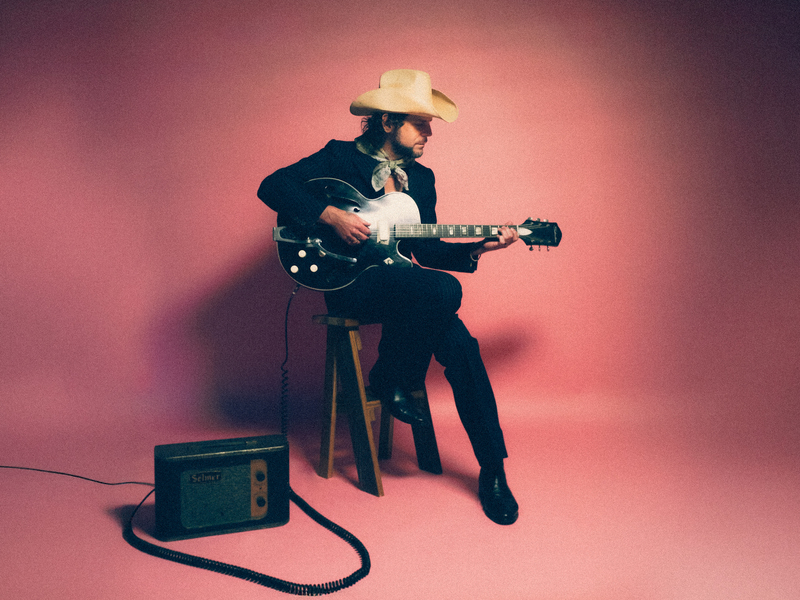
Langhorne Slim, The Dreamin' Kind
Leave it to Langhorne Slim — a pioneer of raw, rule-breaking Americana for more than two decades — to reach far beyond the genre he helped inspire.
The Dreamin' Kind, his ninth studio album, finds the Nashville transplant strapping on an electric guitar and embracing his longtime love of larger-than-life rock & roll. With its chugging power chords, 1970s-sized riffs, and richly layered arrangements, The Dreamin' Kind is fueled not only by sheer amplification, but by the soul-baring songwriting that's become Slim's calling card, too. Tucked between those anthems are acoustic-driven songs that skirt the outer orbits of folk music, from the bare-boned heartbreak of "Stealin' Time" to the organic, orchestral sweep of "Dance On Thru." The result is the more explorative and expansive album of Slim's career: a record made for rock clubs, campfires, and garages alike, produced by Greta Van Fleet's Sam Kiszka, and anchored by a lifelong desire to break down new walls.
"It felt like I was blowing some old shit up so I could plant some new flowers," Slim says of the creation process. "I love acoustic music. I love folk music. But those aren't my only loves. Rock & roll has always tickled the same place in my soul as great singer-songwriter music, and I wanted to explore those influences. Raw songs that make you feel something: that's the stuff I'm after."
Slim was touring behind 2021's critically-acclaimed Strawberry Mansion — his debut on the Billboard 200 chart, stacked with songs inspired by his life-changing decision to get sober from prescription pills — when he found himself opening for Greta Van Fleet in Connecticut. The Grammy-winning rockers were fans of Slim's music long before he hit the stage as their opening act. "I remember hearing Lost at Last, Volume 1 for the first time, and it absolutely resonated with me," says bassist Sam Kiszka. "He has the conviction of 100 singers. He puts his entire body and soul into it. I listen to 'The Way We Move' and I think, 'That's a rock & roll song, right there.' Rock & roll isn't a sound, necessarily. It's an energy, and he's got it."
Back in Nashville, Slim began visiting Kiszka's house for a series of loose songwriting sessions. Greta Van Fleet's drummer, Danny Wagner, joined them, adding swagger and stomp to the guitar riffs that Slim brought to the table. From the very first note, things felt different. "When I'm at home, I'm usually playing acoustic guitar on the couch, and I don't have much opportunity to plug in and rock out," Slim explains. "Working with Sam and Danny gave me a chance to get loud. I'd introduce a riff and we'd all start playing, and it was fucking beautiful. It reminded me of when I was real young, and I'd go to New Jersey and watch my cousin rehearse with his garage-punk band in his basement."
Songs began to take shape: "Rock N Roll," with its propulsive pulse and ecstatic, electrifying hooks; "Haunted Man," a hard-rocking juggernaut with a dreamy, harmony-drenched B section; "Dream Come True," whose raw tangle of acoustic instruments gives way to a gorgeous, swelling crescendo; and "On Fire," whose studio recording kicks off with a voice message from Slim's grandmother before making room for Motown influences and soulful strut. This was new territory for Slim. For years, he'd been the ringleader of his own roots-music circus. Now, he was a collaborator, making a louder sound with different partners. "It was such a natural, happy place for me," he recalls. "I don't do many projects with other people, but Sam and I see eye-to-eye. We were buddies, hanging out and creating something new together. That's where you get the most real shit."
The Dreamin' Kind was recorded over the course of a year. Langhorne took his time, scheduling the tracking sessions between his commitments as a touring musician, a family man (whose blended household includes his wife, his stepdaughter, and a young son), and an advocate in his recovery community. He also embraced the overdubbing process, working with Kiszka to create towering, thickly-stacked rock & roll epics full of vintage keyboards, harmonies, grooves, and full-throttle guitar fretwork. The folk songs received their own share of overdubs, too, with layers of fiddle, banjo, and organ being added to Slim's acoustic guitar. "For a long time, I thought that production always meant over-production, and too much production was always a bad thing," he admits. "There's an art to production that I've never truly danced with, though, and we did much more of that with this record. We built up the songs, even the folkier ones. Normally, I'd book a studio for ten days and we'd try to knock out an entire album during that time, working as quickly as possible. This wasn't like that. We didn't have time constraints. We didn't give ourselves any constraints, and I love the results."
Those results speak for themselves. There's nothing in Langhorne Slim's catalog like "Strange Companion," whose combination of overdriven guitar fuzz and wild, amplified abandon nods to influences like T Rex and Iggy Pop. There's nothing like "Loyalty," a scuzzy anthem for dive bars and garages, driven forward by handclaps and a rock & roll progression straight out of the late-1960s. At the same time, The Dreamin' Kind makes room for slower songs and folkier textures, too, building a bridge between Slim's past and present. He compares the variety to a mixtape — "the cassettes we all used to make for our girlfriends, where every song was exciting but also different than anything else on the tape," he clarifies — while Kiszka references the genre-bending artists who came before them.
"I love albums like All Things Must Pass, because the songs sound completely different, with their own production styles," Kiszka says, nodding to George Harrison's classic release. "A lot of people make records that sound uniform and cohesive, but Sean likes to move around a bit. How often can you listen to an album filled with nothing but loud guitars? You have to bring it down once in awhile. You have to remind listeners of Sean's superpower, which is him and an acoustic guitar. We enjoyed jumping from one style to another. I just hope the listener doesn't get whiplash. Be safe when you listen to this thing!"
For Langhorne Slim, though, there's no safety in repeating the steps he's already taken. He'd rather head in a different direction, chasing down unexpected horizons, showcasing a musicality that continues to evolve and expand with every step. Other artists might feel tempted to replicate the sound of, say, The Way We Move — a career-changing record praised by Rolling Stone as "damn near perfect" — but where's the imagination there? Where's the discovery? Slim has always been a dreamer, after all… and here, he's dreaming up something new.
Read More
Read Less
Location
Codfish Hollow Barnstormers5013 288th Ave, Maquoketa, IA 52060
Refund policy
Contact
Support[email protected]
Lookup your orderClick here
VIP Balcony$ 45
Sale ends in 13 daysSale ends in 13 days
VIP Balcony$ 45VIP Balcony$ 45
Sale ends in 13 daysSale ends in 13 days
VIP Balcony$ 45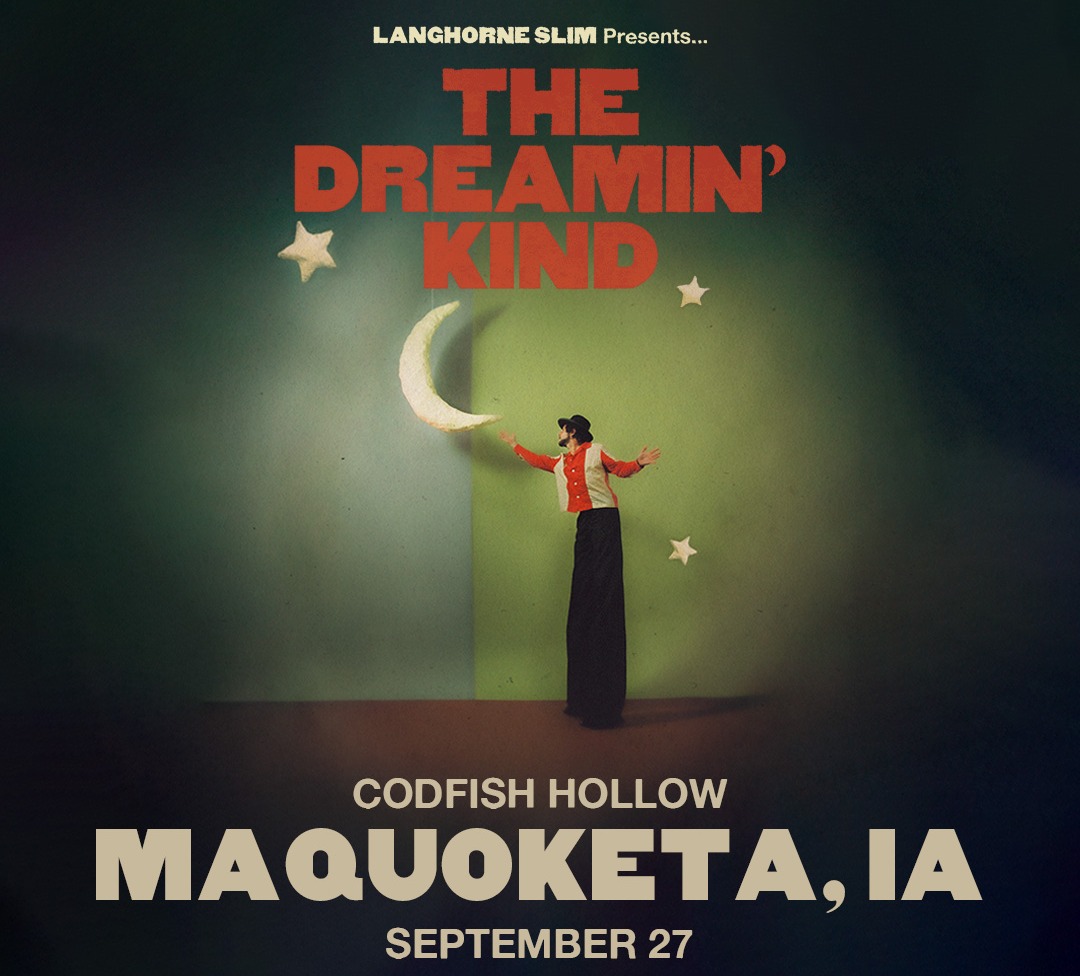


.jpg)
.jpg)